Peptide profiler
Quick adme quote
Connect with us

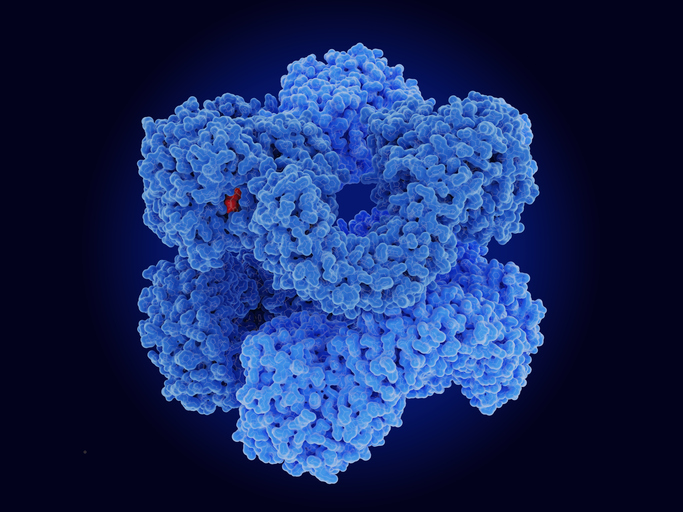
Inflammasomes sit at the intersection of innate immunity and neuroinflammation. Whether you're developing therapies for Alzheimer's disease, Parkinson's disease, multiple sclerosis, autoimmune diseases or systemic inflammatory disorders, selecting the appropriate biological models early is essential for demonstrating efficacy, selectivity and mechanism.
Developing therapies against NLRP3 and other inflammasome pathways demands more than a single screening assay. Success depends on selecting biologically relevant models, confirming mechanism of action, understanding downstream immune responses, and generating evidence that translates confidently into later development.
Concept Life Sciences combines neuroscience, immunology and translational biology expertise with advanced cellular models and orthogonal functional readouts to help reduce development risk and accelerate better decisions.
Download Inflammasome Whitepaper
Despite growing interest in inflammasome biology, many programs struggle because early experimental systems fail to predict clinical performance.
Teams commonly face:
Better models create better decisions, and our scientists help design studies that answer the questions most likely to de-risk your program and not simply generate more data. Read more about our neuroscience models.
Overcoming attrition in inflammasome therapeutics starts with smarter preclinical design. By integrating selectivity, efficacy, toxicity, and mechanism of action (MoA) studies earlier, we can improve success rates and accelerate development.
Read the full article in European Biopharmaceutical Review (EBR) Spring 2026. © Samedan Ltd
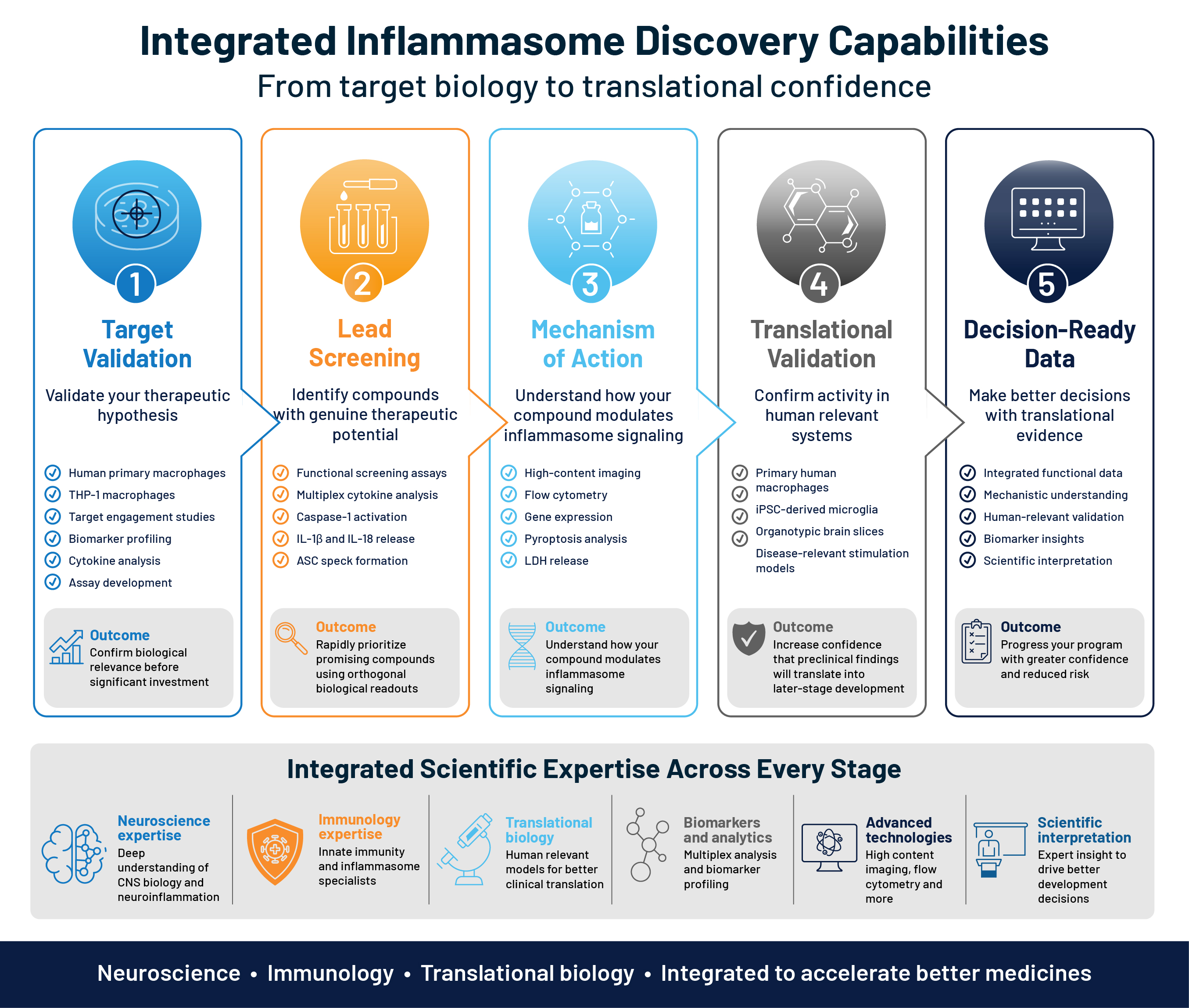
Robust, reliable assays are key to translating preclinical results into clinical success. We offer a suite of assays that probe the NLRP3 inflammasome which can be adapted to investigate other inflammasome targets:
Inflammasome signaling contributes to numerous neurological and immune-mediated diseases. Our scientists combine expertise from neuroscience and immunology to design studies that reflect disease biology, whether your program focuses on:
Cross-disciplinary expertise enables studies that examine both immune activation and downstream tissue responses within a single experimental strategy.
Drug discovery programs rarely fail because one assay performs poorly. More often they fail because individual experiments do not collectively answer the biological questions needed to progress confidently.
Our scientists design integrated studies that combine:
The result is decision-ready evidence rather than disconnected datasets.
Ensure your drug discovery program is grounded in a strong scientific foundation to accelerate your path to the clinic. Download our whitepaper on Inflammasome Biology in Drug Discovery, watch our webinar or read the accompanying poster for deeper data insights.
Are you ready to advance your inflammasome therapeutics?
A: The optimal model depends on your therapeutic target, development stage and indication. Early screening often benefits from robust immortalized cell systems, while primary human cells, iPSC-derived microglia and organotypic brain slices provide greater translational relevance for candidate validation.
A: No. While NLRP3 is our most established platform, our assay development expertise can be adapted to investigate additional inflammasome pathways and emerging therapeutic targets.
A: Yes. We combine inflammasome biology with specialist neuroscience capabilities including human iPSC-derived microglia, astrocytes, neuronal models and organotypic brain slices to support neurodegenerative disease research.
A: We combine orthogonal functional endpoints including cytokine secretion, caspase-1 activation, ASC speck formation, pyroptosis, biomarker analysis and high-content imaging to confirm on-target activity and biological effects.
A: Yes. Every program is designed around your target biology, therapeutic hypothesis and development objectives, allowing scientists to combine assays, models and analytical technologies into a tailored experimental strategy.