Peptide profiler
Quick adme quote
Connect with us


Expert Knowledge

Edinburgh
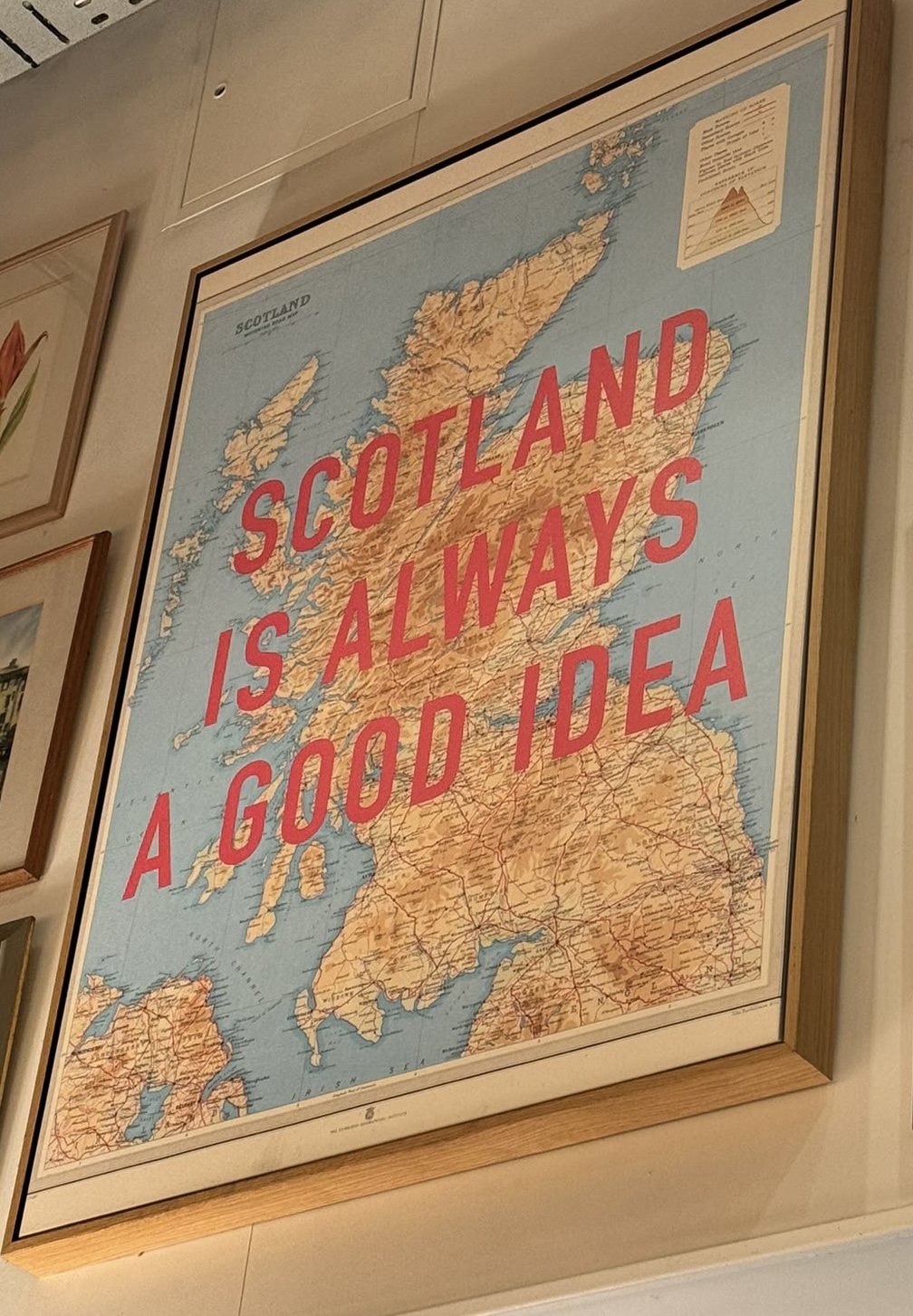
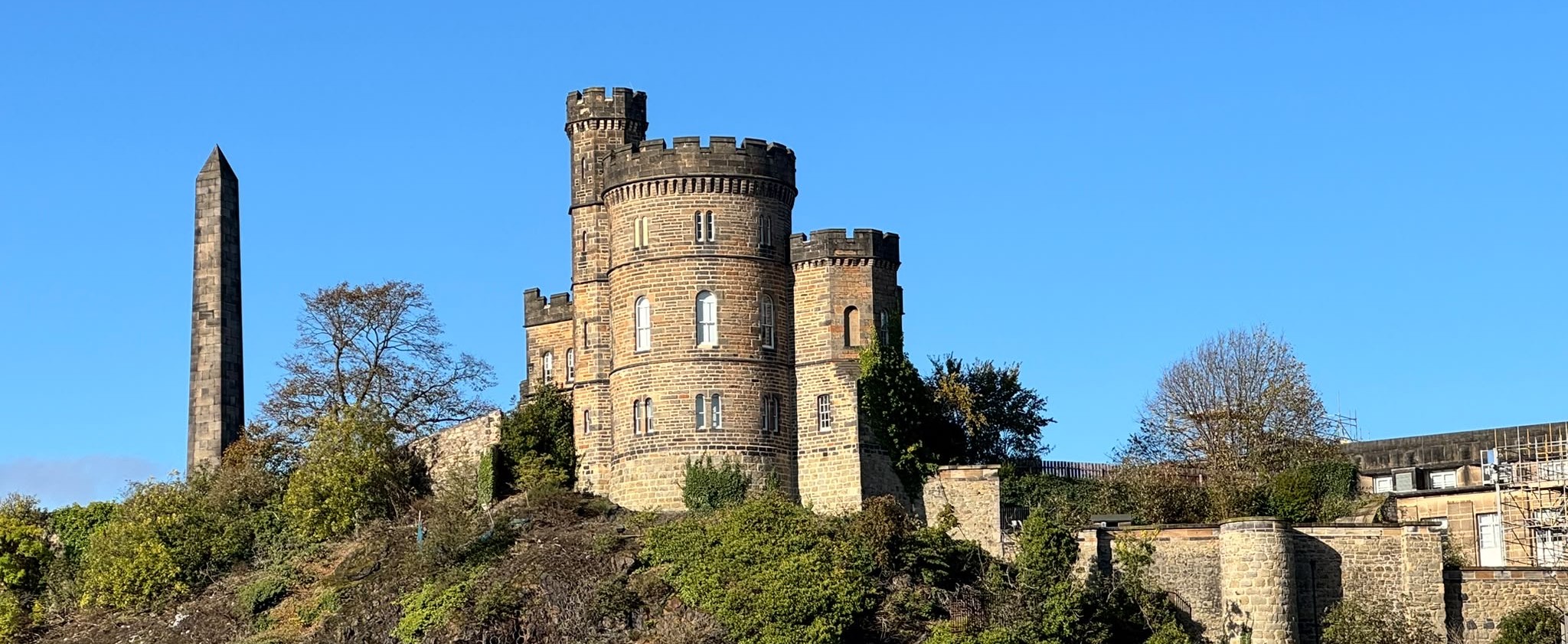
I'm beginning to suspect the British weather is on its best behavior because I'm new here. With my first days in Chapel behind me, I came north to meet Concept Life Sciences' Scottish colleagues.
Do you remember the sheep from my last blog who watched me with a look I couldn't quite read? I think I have finally solved the mystery: just outside Edinburgh, at the Roslin Institute, a lamb called Dolly was born from a single cell of an adult ewe, the first mammal ever cloned that way. If scientists had once made a copy of your relative, you would keep an eye on them too, wouldn't you?
You may not know it, but Scotland’s national animal is the unicorn. Given what Edinburgh scientists did with a sheep, I’m not entirely sure the unicorn is a myth. A decade later, Shinya Yamanaka showed that adult cells could be given a different kind of second chance, using just a handful of genes to turn them back into stem cells, so-called induced pluripotent stem cells.
Those cells are now part of everyday life in our labs, where the team has been doing sophisticated translational biology for more than 15 years. In Chapel-en-le-Frith, our scientists design and test molecules while in Edinburgh, we take the next step, understanding whether those molecules can change disease biology in human cells, in ways that might ultimately matter for patients.
Neuroinflammation is a good example. In diseases such as Alzheimer's and ALS (amyotrophic lateral sclerosis), astrocytes, the brain's support cells, can turn from caretakers into troublemakers that harm the neurons around them. I learned that the neuroscientists in Edinburgh can recreate that switch in human iPSC-derived astrocytes, and then use the cells' own gene activity to look for targets that might switch them back.
One important driver of neuroinflammation is the inflammasome, a molecular alarm system inside immune cells, including those in the brain. When it gets stuck on, inflammation simply doesn't stop. The immunologists know this alarm inside out: how to set it off, how to measure it, and how to tell whether a molecule can really switch it off, from a single human cell all the way to living brain tissue.
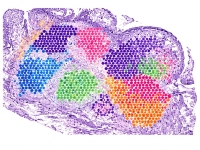
Diseases, after all, don't happen in single cells but in tissues, where cells live side by side and constantly influence one another. The spatial biology team can stain up to a hundred markers on a single slice of tissue and see not only which cells have changed in a disease, but exactly where they sit and who their neighbors are. And because this works on real patient samples, the same approach can follow a medicine from the lab all the way into clinical trials.
What excites me most is how these capabilities fit together, connecting chemistry, human disease models and patient tissue to help our clients make better decisions, earlier.
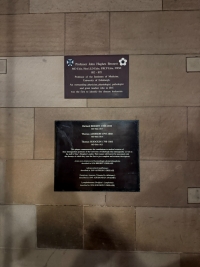
Long before anyone used the phrase “translational medicine”, Edinburgh was already practicing it.
In the eighteenth century, chemistry was taught here as part of medicine, and students learned at the bedside of real patients in the Royal Infirmary. The university walls are still covered in reminders, from Richard Bright, Thomas Addison and Thomas Hodgkin, whose names every medical student still knows, to Sir Arthur Conan Doyle, who trained as a doctor here before treating us to Sherlock Holmes.
My favorite story, though, belongs to James Young Simpson. The story says that one November evening in 1847 he and his friends sat around his dining table and inhaled chloroform to see what it would do. They woke up on the floor, and Simpson knew he had found an anesthetic. I must admit it may be the shortest route from bench to bedside in history. These days, however, we prefer to test on human cells rather than on dinner guests.
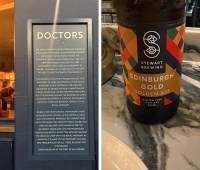
This city keeps medicine close even after work.
The Doctors pub, built in 1874 to mark the opening of the Royal Infirmary and once home to a maker of surgical instruments, has a board by the door promising a prescription to everyone who reads it.
I followed doctor's orders, a pint of Edinburgh Gold, a local golden ale. Anything that comes with its own clear label has my full approval.
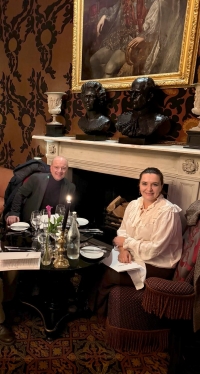
Science is a small world, and one of its quiet pleasures is that friends turn up in the best places.
In Edinburgh I met one of them, Igor Rudan, a fellow scientist of Croatian origin, for dinner at Rhubarb, the restaurant of Prestonfield House. I have rarely been anywhere more theatrical, red walls, gold frames, and candlelight everywhere. The name has a medical story too, in the 18th century, when rhubarb was a remedy rather than a pudding, the physician Sir Alexander Dick grew it here, in the garden of his own home, and won a gold medal for it.
"Leaving Edinburgh, I realized that the city's old knack for turning discoveries into medicines also lives on in our labs today. The tools have changed a lot since Simpson's dinner table, but the goal hasn't – to find out what will really make a difference for patients".
The sound that saw me off was a kid playing the bagpipes in the street.
It felt like Scotland's own way of saying goodbye, a little Burns’ Auld Lang Syne just for me.
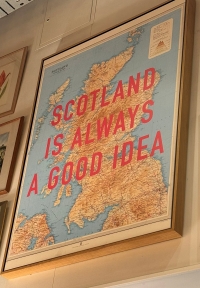
For the science, the history, and the conviviality, Scotland, it turns out, really is always a good idea.
P.S. Next stop: Sandwich, where our most promising molecules grow up and get made at scale. I can’t wait to meet the team there.