Peptide profiler
Quick adme quote
Connect with us


Poster

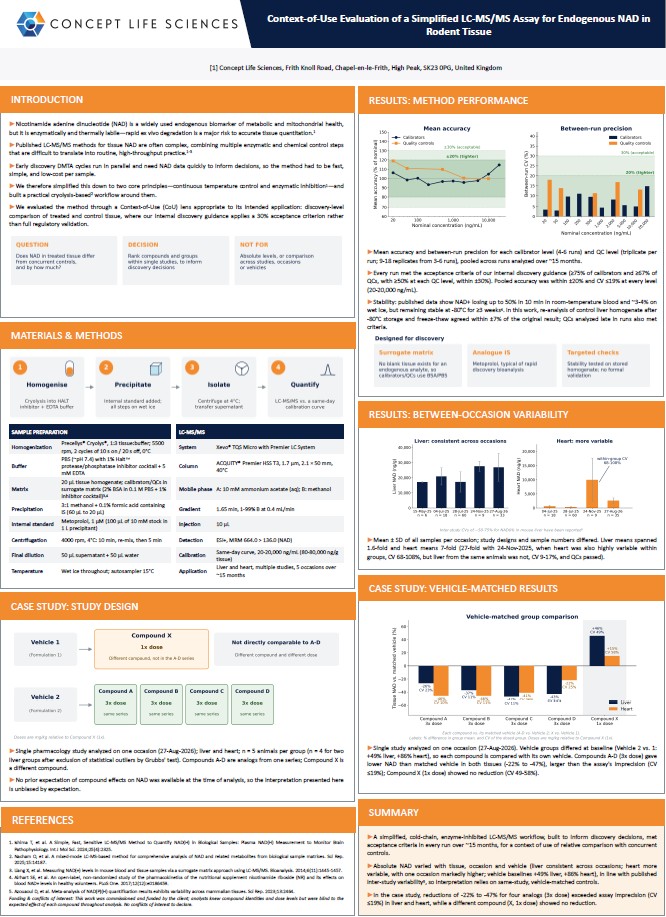
Nicotinamide adenine dinucleotide (NAD) is a widely used endogenous biomarker of metabolic and mitochondrial health, but it is enzymatically and thermally labile—rapid ex vivo degradation is a major risk to accurate tissue quantitation. Published LC-MS/MS methods for tissue NAD are often complex, combining multiple enzymatic and chemical control steps that are difficult to translate into routine, high-throughput practice. Early discovery DMTA cycles run in parallel and need NAD data quickly to inform decisions, so the method had to be fast, simple, and low-cost per sample. We therefore simplified this down to two core principles—continuous temperature control and enzymatic inhibition — and built a practical cryolysis-based workflow around them. We evaluated the method through a Context-of-Use (CoU) lens appropriate to its intended application: discovery-level comparison of treated and control tissue, where our internal discovery guidance applies a 30% acceptance criterion rather than full regulatory validation.
Alternatively, search our entire resource library here