Peptide profiler
Quick adme quote
Connect with us


Expert Knowledge

13/4/2026
Concept Life Sciences’ expanded assay and screening capabilities strengthen its integrated approach to accelerating drug discovery. But beyond the technology, we spoke with the team about their perspectives, challenges, and motivations.

When Concept Life Sciences unveiled its expanded assay development and screening facility at its Chapel-en-le-Frith headquarters in early 2026, the announcement marked a strategic step forward in the company’s integrated drug discovery model, bringing together chemistry, ADMET and screening biology in a way designed to accelerate programs from concept to clinic.
Facilities and technology are only part of that story. The real engine behind the capability is the team of scientists translating those tools into actionable insights for clients. At the center of the effort is a group whose combined experience spans assay design, high-throughput screening, troubleshooting, and scientific leadership.
We sat down with the team, Andy Scott (Associate Director), Steve John (Senior Scientist), Robert Workman (Associate Principal Scientist & Study Director), and Gary Ho (Senior Scientist) to explore their perspectives, challenges, and motivations in their own words.
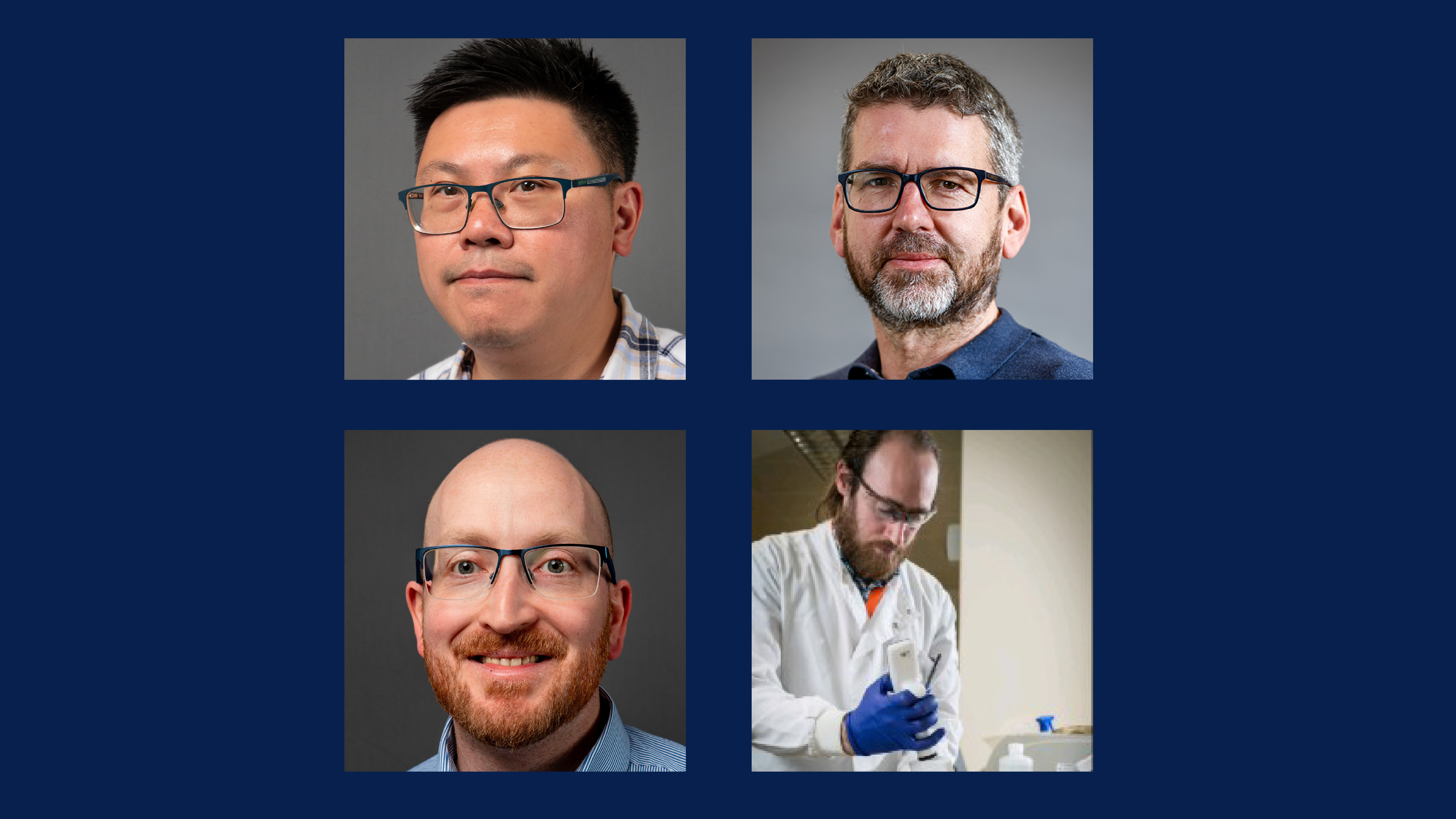
Together, they represent the collaborative culture that underpins Concept Life Sciences’ approach to discovery science. Their work sits at a pivotal point in drug development, where promising compounds first encounter the rigorous testing needed to determine whether they can truly move forward.
This team knows better than anyone that the quality of the assay directly shapes the decisions that follow. For them assay development isn’t a routine laboratory exercise but a process that requires scientific judgement, technical precision, and constant vigilance. Across the team, there is a shared conviction that an assay only has value if it enables better decision-making for the client.
Andy describes that responsibility as central to the role.
“If the assay isn’t robust and the data can’t be trusted, the consequences for a project are serious. We design assays to be specific, sensitive, reproducible and robust, and we constantly monitor their quality.”
Steve approaches the same challenge through the lens of practical usability, ensuring that even the most sophisticated assay can function efficiently within a real discovery workflow:
“You can spend months developing an incredible assay that tells you everything you could possibly want to know about your compound, but if it takes a week to run at a cost of £1000s, it’s not useful. You always have to be aware of how the assays will work in practice.”
For Robert and Gary, the craft and challenge of assay development itself remains deeply rewarding. Gary explains:
“I enjoy scientific problems that require digging into the root cause of unexpected results. I like working out whether an issue comes from the biology of the assay, limitations in the method, variability in equipment, or technical factors such as reagent quality or handling. Problems that involve interpreting ambiguous data or understanding why something isn’t behaving as expected are the ones I enjoy most.”
Robert adds: “Building an assay to the point reliable compound profiling is hugely satisfying, and to see an assay that you’ve built run consistently makes you take pride in your work.
The newly expanded facility has strengthened one of Concept Life Sciences’ defining advantages: integration. By bringing multiple scientific disciplines together in a single location, the company has shortened the distance between discovery chemistry and biological screening, a shift that directly impacts the pace of drug discovery.
Steve sees this integration most clearly in the speed of the workflow: “Compounds can come from chemistry in the morning, be in an assay that afternoon, and we’ll have analyzed and QC'd data the next day. It’s a massive boost to efficiency and decision-making.”
Gary points out that the benefits of co-location extend beyond speed alone and include reduced risk for clients: “Compounds don’t need to be shipped, which avoids costs and eliminates the risk of degradation during transport. Chemists and biologists can communicate directly, so if anything is uncertain, the chemistry team can immediately run stability checks such as LC‑MS without delays.”
Robert believes the most important advantage may be less tangible.
“Being a unified team with direct communication is incredibly valuable. Integration isn’t just structural, it’s cultural.”
For the scientists behind the assays, collaboration with clients goes far beyond solely executing experimental requests. Instead, the goal is to function as an extension of the client’s own discovery team.
Andy sees continuous dialog as essential to that relationship.
“We should be an extension of the clients team. There has to be a flow of information and discussion from the very start of the project that continues throughout. Leaving everything to monthly meetings risks missing vital pieces of information and data that might make a big difference in the direction of the project.”
Robert emphasizes the human dimension of those collaborations.
“Great partnerships are person-driven. It’s important to meet each other as people to get there. And even when difficult decisions have to be made, a great partnership means there is trust and confidence to find the right solutions”
Looking ahead, the team see assay development becoming increasingly shaped by advances in computation, automation, and emerging therapeutic approaches. Andy points to the growing influence of computational triage in refining screening strategies.
“The rise of computer-aided drug design and in-silico screening means you can identify and triage potentially billions of compounds, so that by the time you progress to in vitro assays then you only require equipment that can screen thousands rather than millions of compounds. Subsequently, hit rates have massively increased and screening becomes more of a compound ranking exercise rather than does the compound bind or not, or does the compound affect activity of the target.”
Robert is particularly excited by the possibilities opened by newer therapeutic modalities.
“It’s never a static field – there are always new initiatives, technologies and innovations that can and should be used. One specific example is of phenotypic-first screening for modalities such as molecular glues – screening generally before finding the specific target of interest.”
Meanwhile, Gary sees automation reshaping the scale and reliability of screening datasets.
“As automation becomes more affordable and widely adopted, more labs will be able to run high‑throughput assays with greater accuracy, consistency, and reproducibility. This means we can generate larger datasets in a shorter time while reducing human variability.”
Across their perspectives, one theme emerges repeatedly: the complexity and importance of assay development at the beginning of the drug discovery journey, and how the skill of the assay development team can determine the fate of an entire program.
Andy outlines the depth of work involved: “Running a routine assay is a tiny part of the job. It’s the development, optimization, troubleshooting, and scientific judgement that really define what we do. These are the first steps in drug discovery. You have to get them right or you risk pursuing false leads.”
Gary outlines how assay development can often be more complex and complicated than people realize.
“I wish more people understood how challenging and uncertain assay development can be. Often there is little or no literature to guide which materials or conditions will work, and even if we have experience with a technique, the instruments in our lab may behave differently from those used elsewhere. There is a lot of scientific judgement, troubleshooting, and resource planning behind the scenes that people don’t always see”
For Robert, the team’s strength lies in its collaborative approach to scientific problem-solving. “We’re a close-knit team who don’t hesitate to seek advise and answers. We care about doing science well and right, be it challenging or routine.”
Together, the team embodies the mindset, expertise, and scientific curiosity that Concept Life Sciences’ expanded assay development capability was built to support, ensuring that each experiment moves clients one step closer to the clinic.