We connect you with specific subject matter experts to ensure support and recommendations tailored to your project.

Thank you, your request has been received.

We're busy connecting you with an expert, who will be in touch as soon as possible.

Oops! Something went wrong while submitting the form. Please try again or email us at webenquiries@conceptlifesciences.com
We will respond to you within 24 hours of your enquiry being received.

You can also find Concept Life Sciences on the following platforms:

T Cell Activation Assays

CD4+ and CD8+ T cells

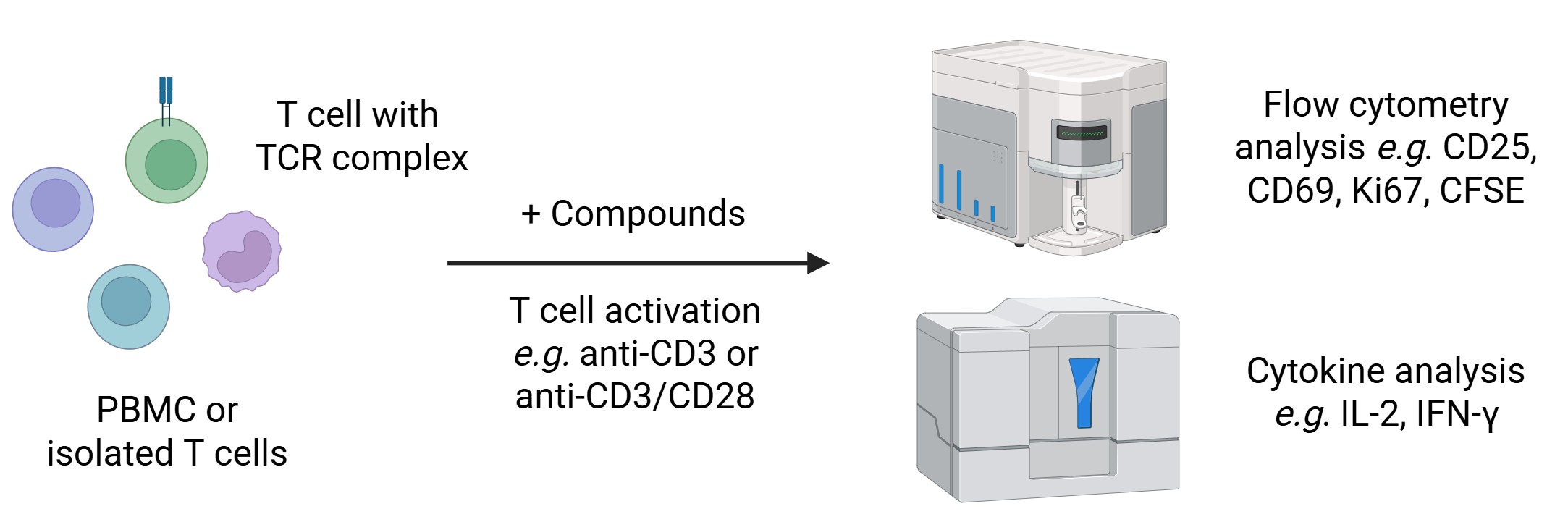
T cells are central regulators of adaptive immunity, driving responses such as cytokine production, cytotoxicity, and immune memory. Modulating T cell activity is critical across therapeutic areas, with enhanced activation desired in oncology and infectious diseases, while suppression is key in autoimmune and inflammatory conditions. This assay uses human primary immune cells to assess T cell activation and immunomodulation across modalities, enabling detection of both immune-enhancing and immune-suppressive effects.
Key benefits

  • Modality agnostic: Works effectively for both biologics and small molecules.
  • Flexible formats (PBMC or isolated T cells) for physiologically relevant or targeted testing.
  • Robust, reproducible activation using optimized stimulation conditions.
  • Multiparametric readouts (activation, proliferation, cytokines) with optional cytotoxicity assessment.

Protocol

T cell assay method
Compound requirements
Test systems
Assay format
Controls
Quantitation
Deliverables

Data analysis and results

  • Flow cytometry measures activation markers (CD25, CD69), proliferation (Ki67 or CFSE), and viability in CD4+ and CD8+ T cells.
  • Cytokines (e.g. IL-2, IFN-γ) quantified by ELISA or multiplex.
  • Cytotoxicity data (LDH-Glo, CellTiter-Glo, or viability staining) complements functional readouts.

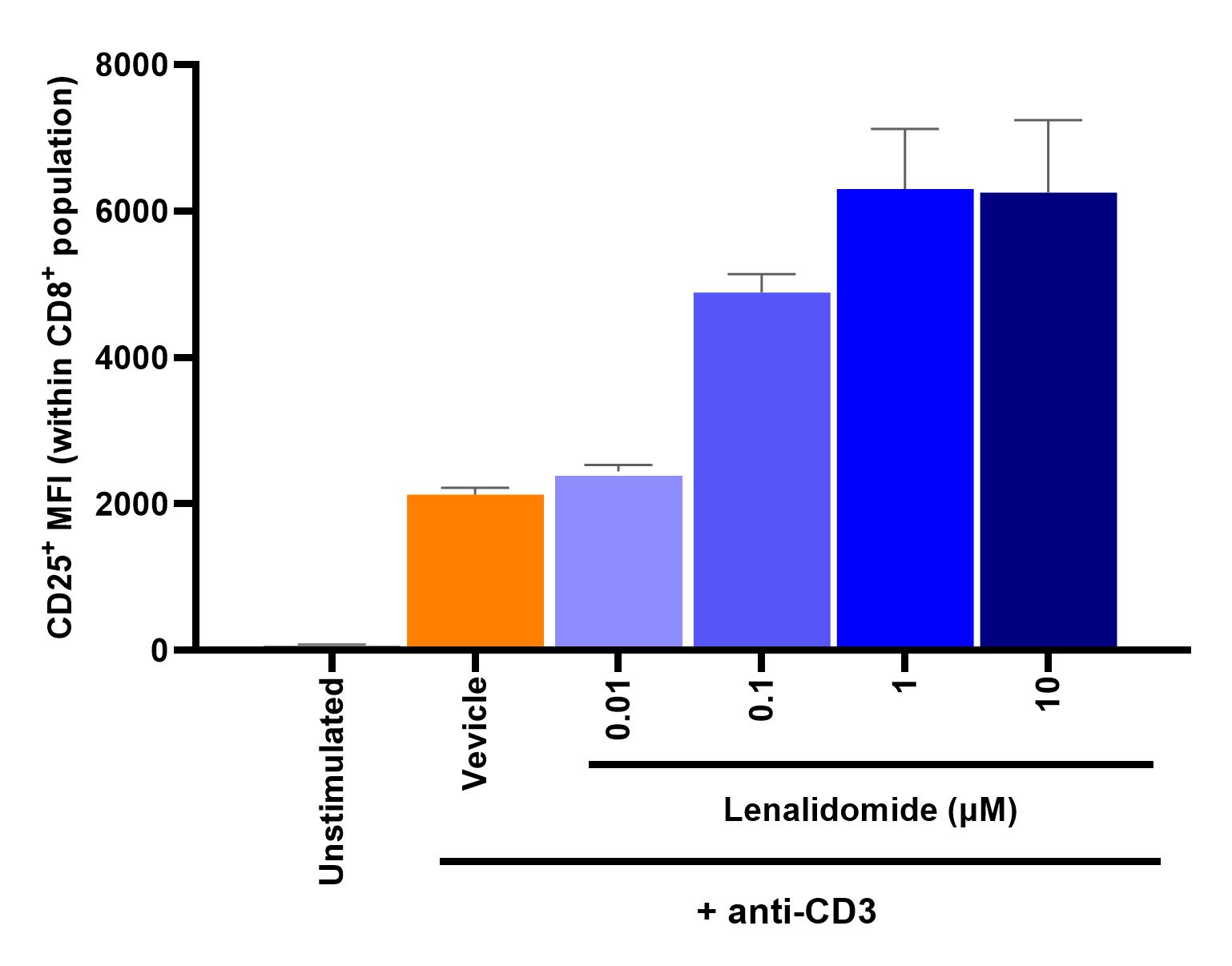
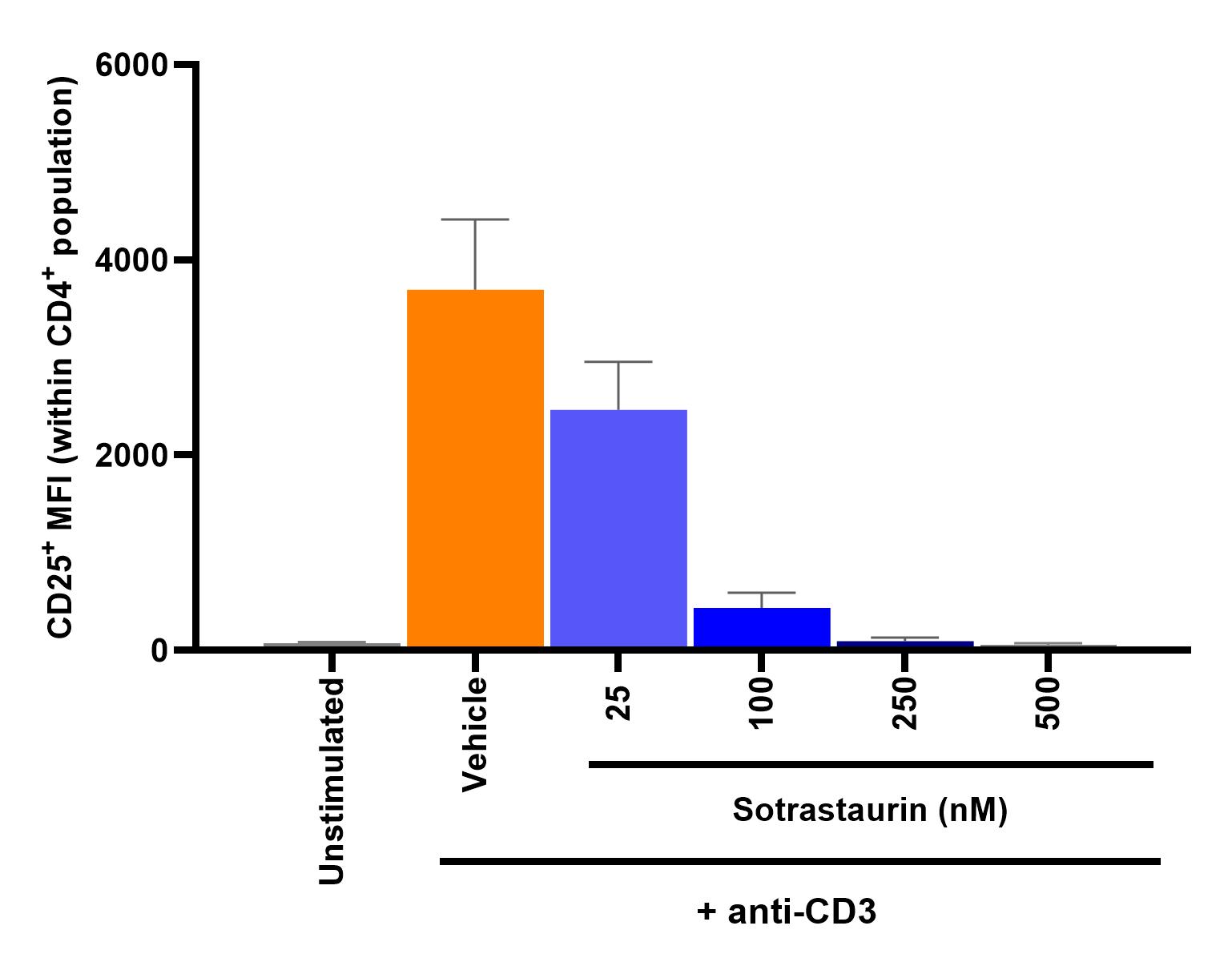
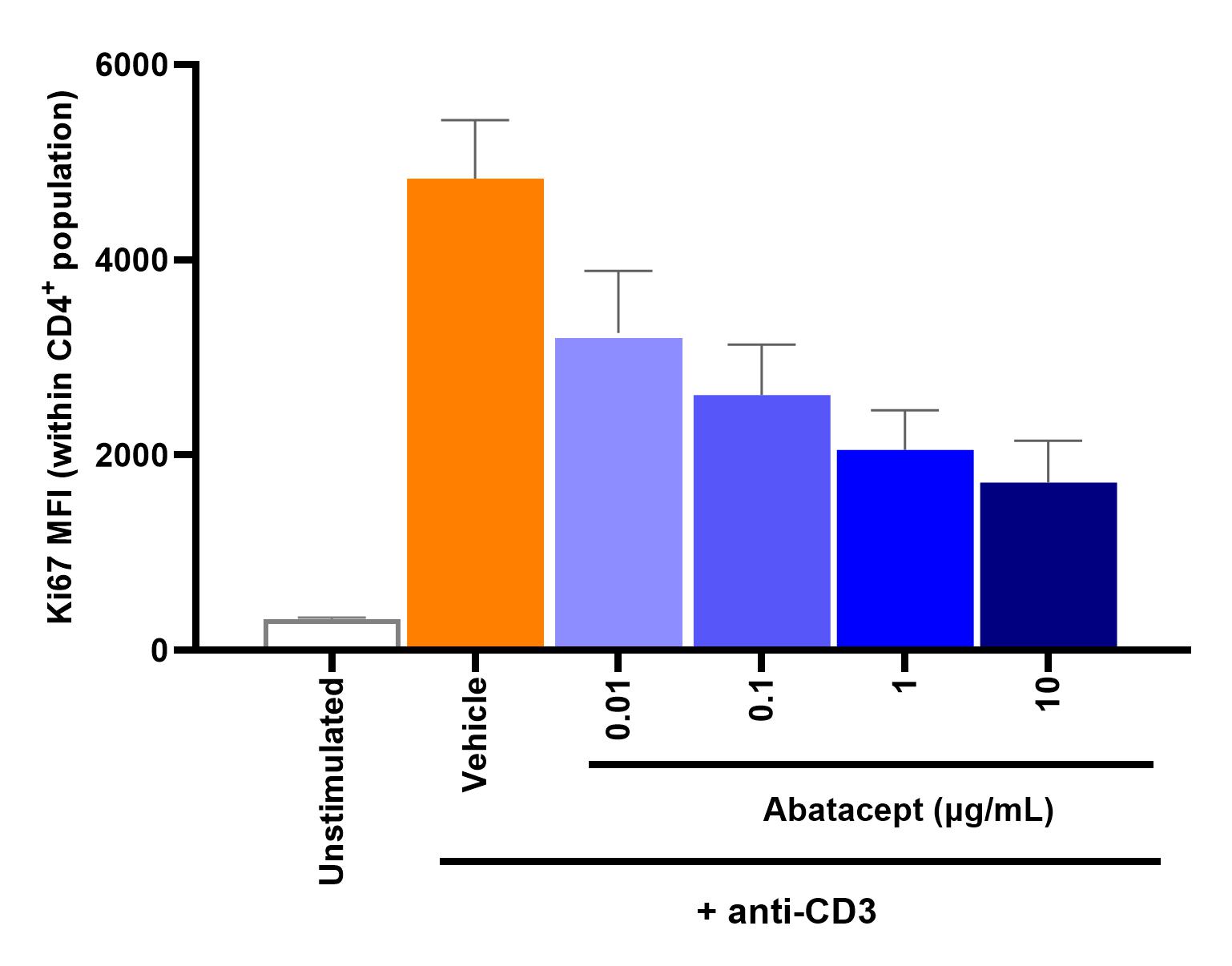
Exemplar data. Abatacept induced a dose-dependent reduction in CD25 and Ki67 expression, consistent with suppression of T cell activation and proliferation. Lenalidomide increased T cell activation, while sotraustaurin decreased T cell activation in a dose-dependent manner, as measured by CD25 expression on CD4+ and CD8+ T cells. PBMCs from four independent donors were analyzed by flow cytometry. Data are shown as mean ± SEM (n = 4 donors).
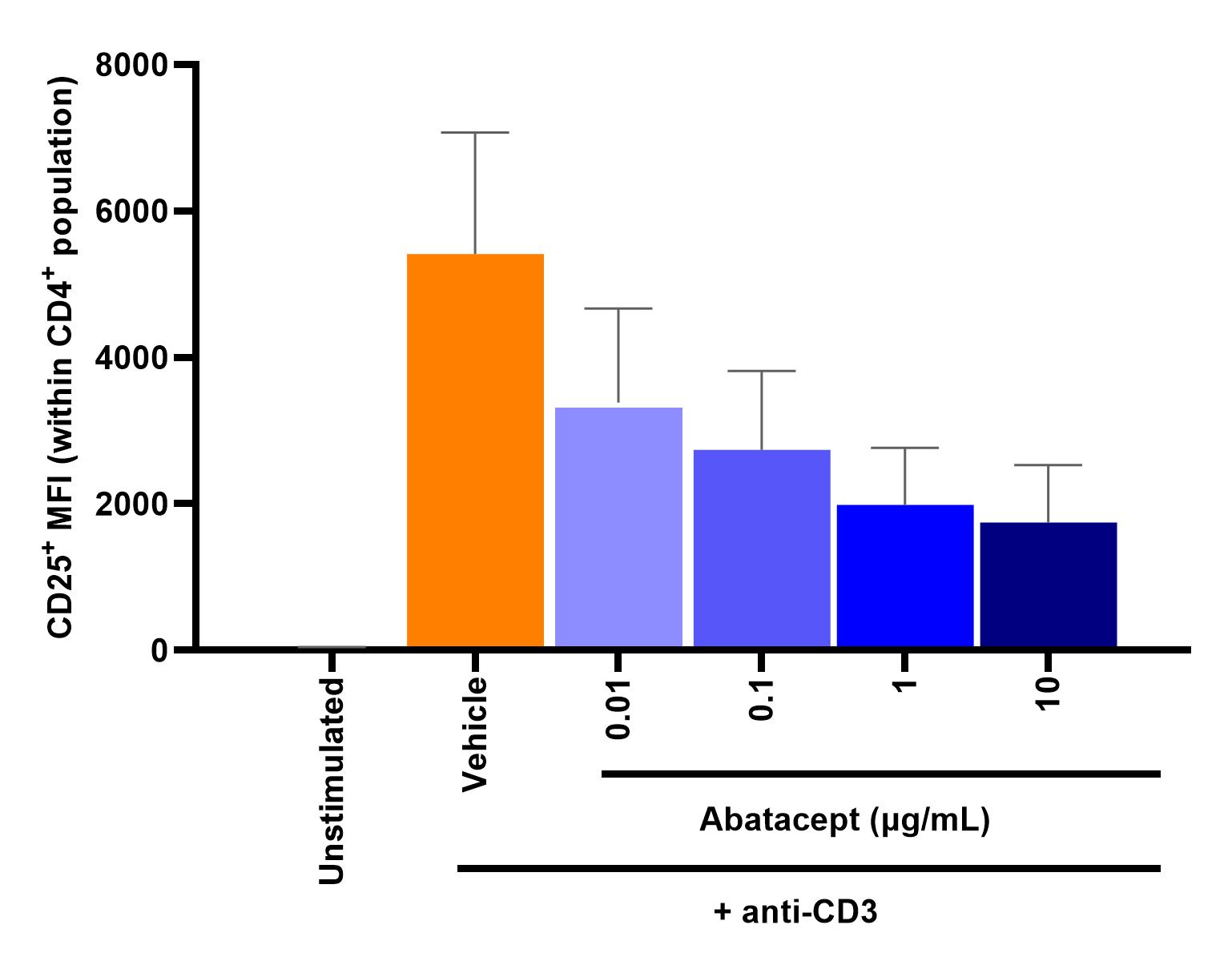
Abatacept only CD4 CD25 MFI P1
Abatacept only CD4 Ki67 MFI P1
Lenalidomide only CD8 CD25 MFI P2
Sotrastaurin only CD4 CD25 MFI P2

Conclusions

This assay provides a flexible, reliable platform to assess immunomodulatory effects across modalities.

It helps solve key client challenges by delivering clear, interpretable data on T cell activation alongside cytotoxicity, supporting confident decision-making for both biologics and small molecule programs.