We connect you with specific subject matter experts to ensure support and recommendations tailored to your project.

Thank you, your request has been received.

We're busy connecting you with an expert, who will be in touch as soon as possible.

Oops! Something went wrong while submitting the form. Please try again or email us at webenquiries@conceptlifesciences.com
We will respond to you within 24 hours of your enquiry being received.

You can also find Concept Life Sciences on the following platforms:

Natural killer (NK) Cell Activation Assays

Evaluating NK cell activation

Natural killer (NK) cell activity is a key driver of immune surveillance and cytotoxic responses. Evaluating NK cell activation is critical across disease areas, as enhancing NK function can be beneficial in oncology (e.g. improving tumor cell clearance), while reducing or modulating activity may be important in autoimmune or inflammatory conditions to limit tissue damage.

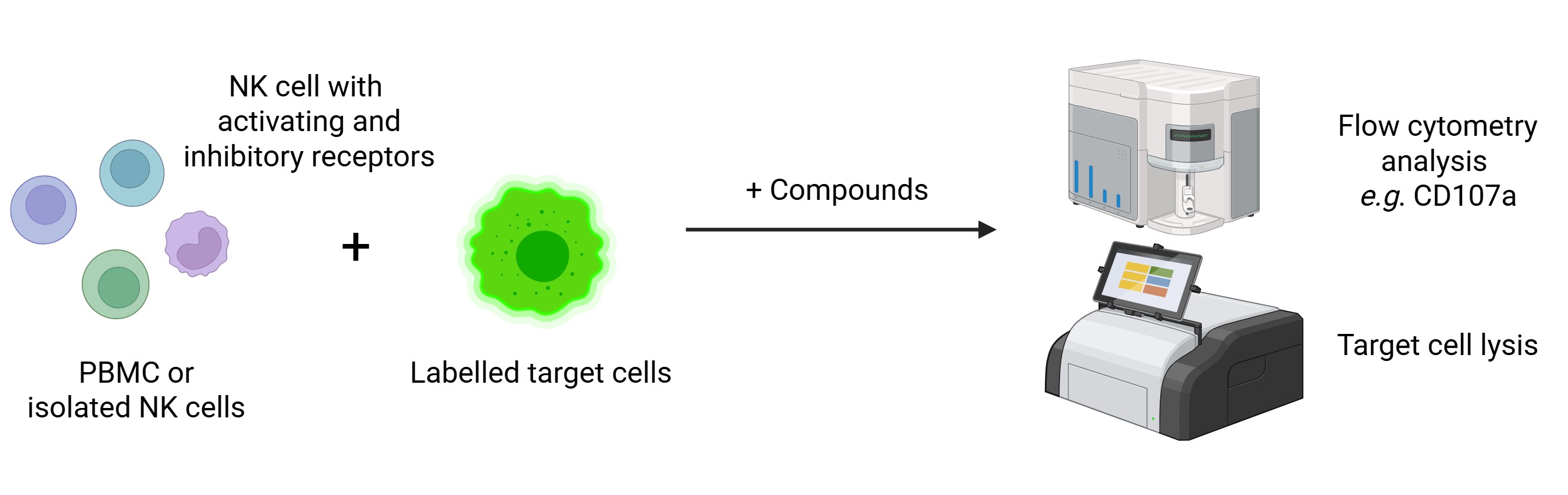
This assay uses human primary immune cells to assess NK cell-mediated cytotoxicity and activation in response to therapeutic compounds.
Key benefits

  • Modality agnostic: Compatible with both biologics and small molecules.
  • Flexible formats (PBMC or isolated NK cells with target cells) for context-specific or focused assessment.
  • Direct measurement of target cell lysis ensures high specificity of functional readouts.
  • Option to include phenotypic markers (e.g. CD107a) for deeper insight into NK cell activation.

Protocol

Compound requirements
Test systems
Assay format
Controls
Quantitation
Deliverables

Data analysis and results

  • Target cell lysis quantified using fluorescence-based assays
  • Flow cytometry used to assess CD107a expression as a marker of NK cell degranulation
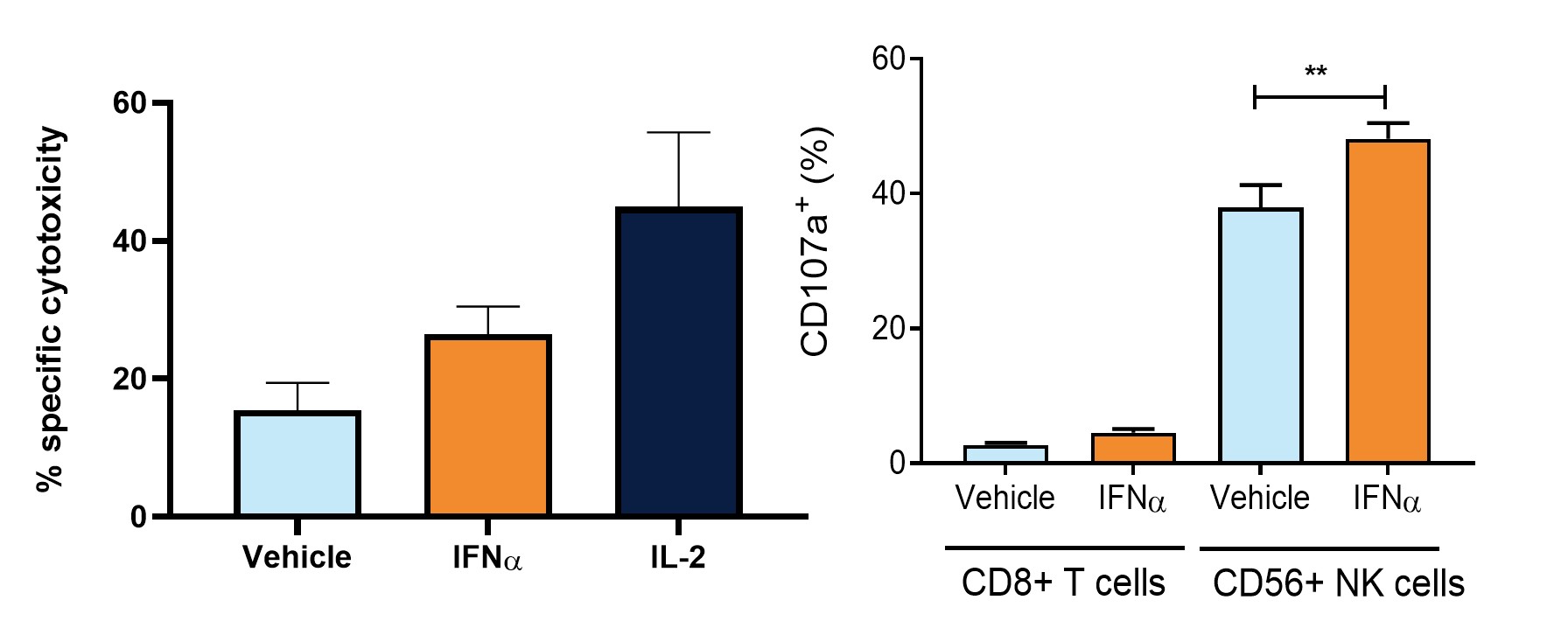
  • Cytokine stimulation (e.g. IFN-α, IL-2) enhances NK-mediated cytotoxicity and activation
  • Data provide quantitative insight into both functional killing capacity and activation state
Cytokines enhance NK cell-mediated target lysis, with IFN-α further increasing CD107a expression as a degranulation marker detected by flow cytometry.

Conclusions

This assay enables focused evaluation of NK cell cytotoxic function and activation dynamics in a controlled in vitro system.

By linking functional killing with phenotypic activation markers, it supports clear characterization of compound effects on innate immune effector responses, informing development strategies in oncology and immune-mediated diseases.