Peptide profiler
Quick adme quote
Connect with us


Regulatory T cells (Tregs) are essential for maintaining immune tolerance and preventing excessive immune activation. Their modulation is highly relevant across disease settings: enhancing Treg activity can be beneficial in autoimmune and inflammatory diseases, while reducing Treg-mediated suppression is a key strategy in immuno-oncology.
This assay uses human primary immune cells to evaluate Treg function and differentiation, supporting assessment of compounds that either enhance or inhibit immune suppression.
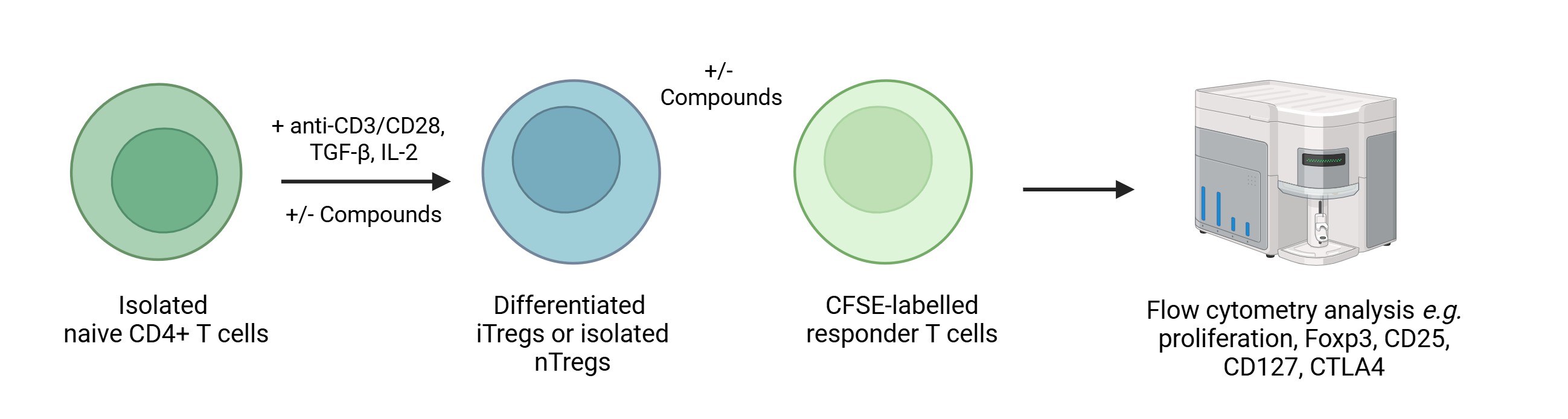
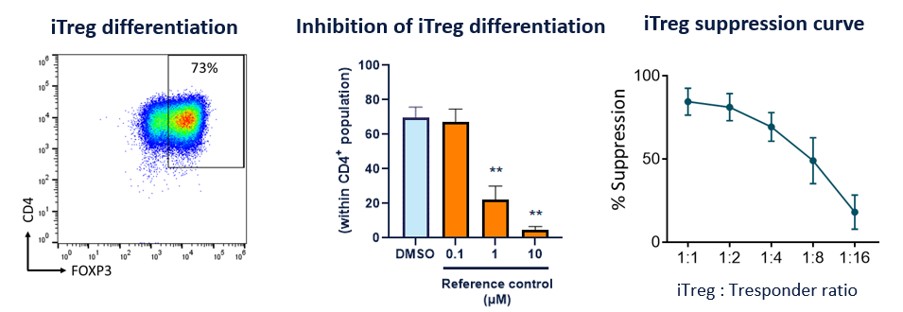
Example: iTreg differentiation leads to increased FoxP3 expression and becomes inhibited by a reference control (galunisertib).
Increasing Treg:Responder ratios result in reduced T cell proliferation, demonstrating dose-dependent suppression.
This assay offers a comprehensive framework to investigate both the generation and functional activity of Tregs in a biologically relevant setting.
By enabling detailed evaluation of Treg differentiation (via FoxP3 expression and yield) alongside suppressive capacity, it provides deeper insight into mechanism of action.
This supports more informed decision-making when advancing therapies targeting immune regulation in both oncology and inflammatory diseases.

