Peptide profiler
Quick adme quote
Connect with us


Many promising cancer therapies show activity in conventional cell lines but fail to translate because they don't capture the complexity of human tumors. Tumor heterogeneity, resistance mechanisms and the tumor microenvironment can all influence therapeutic response and lead to costly late-stage setbacks.
Our oncology experts use disease-relevant in vitro models, advanced imaging, transcriptomics and translational biology to generate decision-grade data that gives you greater confidence in candidate selection, mechanism of action and progression towards the clinic.
Despite major advances in precision oncology, many promising drug candidates fail during development because preclinical models do not accurately predict clinical performance. Common challenges include:
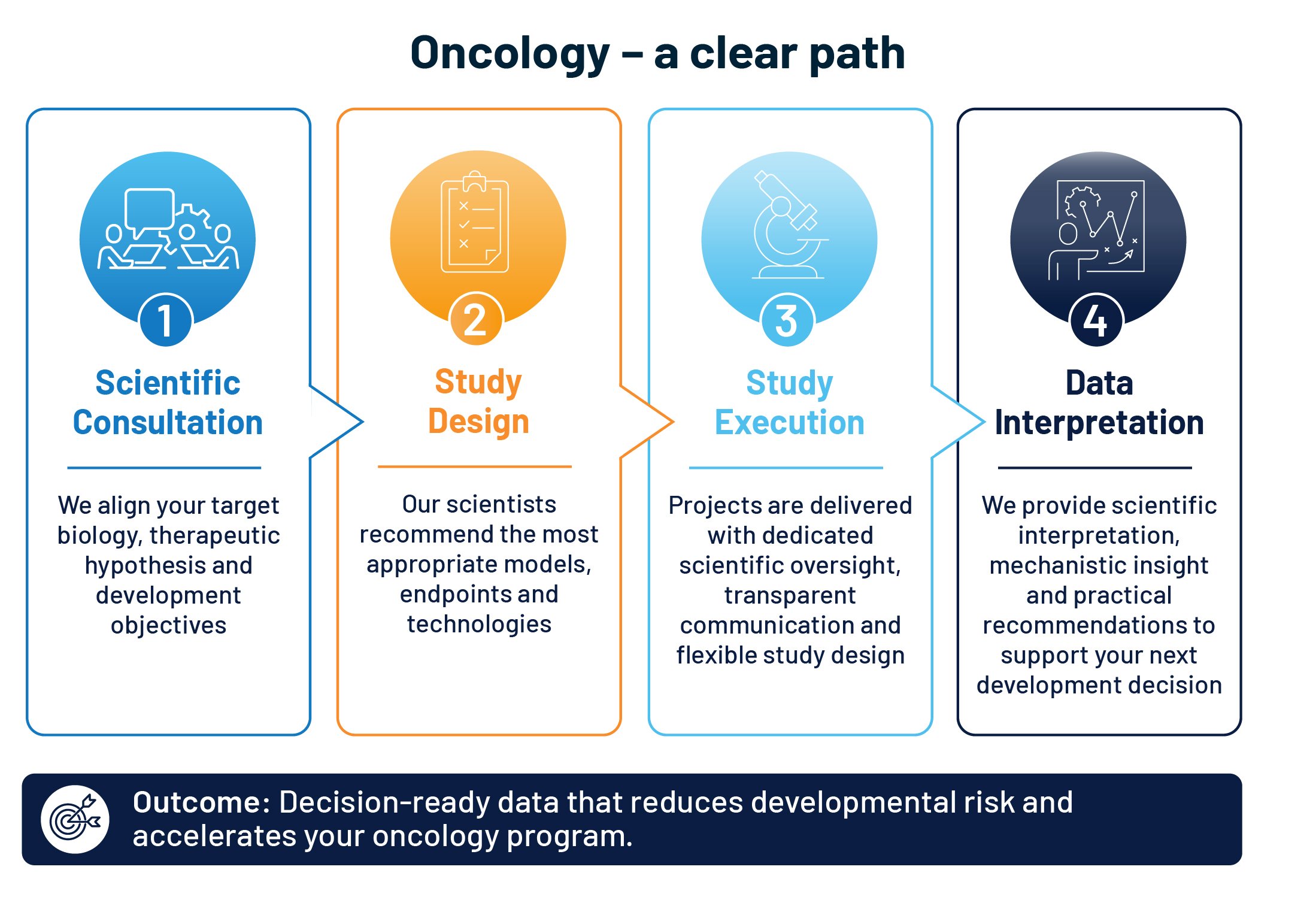
Through designing studies around your biological questions, not simply running assays, our scientists help you overcome these challenges, so you generate evidence that supports confident development decisions.
Supporting oncology programs with disease-relevant models and advanced biological technologies that deliver meaningful, predictive insight early in development. Our oncology CRO services combine decades of scientific expertise with advanced in vitro platforms to help you navigate biological complexity, avoid common development pitfalls, and generate the robust data needed to progress your drug to market with confidence.
Many cancer drugs demonstrate promising activity in conventional monolayer cultures but fail when exposed to the complexity of real tumors.
Our oncology platforms incorporate relevant 3D systems and immune-competent models as well as clinically relevant biology to better predict therapeutic performance before costly in vivo or clinical studies. Download the assay card: Advancing Drug Discovery with 3D Spheroid Cancer Models.
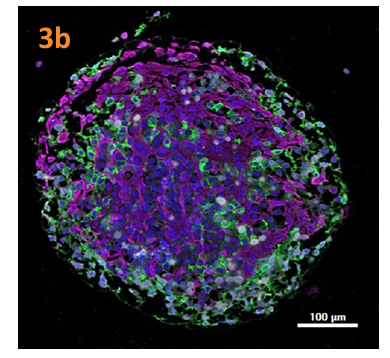
Available models include:
A suite of automated tools supports in-depth profiling of the tumor microenvironment.
Understanding why a therapeutic works is just as important as demonstrating efficacy. Our scientists combine multiple technologies to characterize:
This generates mechanistic evidence that supports candidate progression and regulatory discussions.
Cancer biology is driven by interactions between tumor cells, stromal cells and immune cells. We build increasingly physiologically relevant models incorporating:

For therapies targeting immune pathways, our specialist immuno-oncology team provides additional expertise in checkpoint biology, macrophage biology, exhausted T cells and immune suppression models.
Making confident development decisions requires more than a single assay. Our integrated biology platforms combine advanced technologies with scientific expertise to generate complementary datasets that provide a comprehensive understanding of drug activity, mechanism of action and phenotypic response across both 2D and 3D disease-relevant models. The result is robust, decision-grade data that helps reduce development risk and accelerate your oncology program.
Our oncology expertise supports research across:
A: We support cancer drug discovery using established cancer cell lines, advanced 3D tumor spheroids, stromal co-cultures and bespoke disease-relevant models selected to match your therapeutic hypothesis.
A: Yes. We combine oncology expertise with dedicated immuno-oncology capabilities including tumor-immune interaction models, T cell assays, macrophage biology and immune checkpoint studies.
A: Yes. Our scientists routinely design custom assays for novel targets, emerging therapeutic modalities and complex biological mechanisms.
A; Our oncology platform includes live-cell analysis, high-content imaging, transcriptomics, spatial biology, functional assays and mechanistic profiling.
A: We use disease-relevant models, mechanism-led study design, advanced biological technologies and clinically relevant biomarkers to generate evidence that better predicts therapeutic success.


